In partnership with BeniBenin, this project focuses on reducing plastic pollution through education, awareness and locally embedded sustainable solutions.
Plastic pollution is one of the most visible and persistent environmental challenges in Natitingou, Benin. Despite a national ban on non-biodegradable plastic bags introduced in 2017, plastic waste remains widespread due to limited enforcement, low public awareness and structural constraints in waste management systems.
Rather than treating plastic waste as a purely behavioural issue, this project approaches it as a broader socio-economic challenge. Plastic remains widely used because it is affordable, accessible and often essential in daily life. For example, sachet water provides a critical source of safe drinking water, making simple bans ineffective without viable alternatives.
The project therefore aims to bridge the gap between policy and practice by combining awareness campaigns, community engagement and the exploration of sustainable business models for waste collection and reuse.
Plastic pollution in Natitingou results from a complex interaction of social, economic and institutional factors rather than individual behaviour alone.
As a result, plastic waste is often burned or disposed of in public spaces, leading to environmental degradation and health risks.
The project focuses on long-term behavioural and structural change through capacity building and local ownership.
A central component is the “Train-the-Trainer” model, where teachers and community leaders are equipped to spread awareness within their own networks, creating a multiplier effect.
The project aims to generate sustainable impact by combining awareness, behavioural change and structural improvements.
Impact is measured through Knowledge, Attitudes and Practices (KAP) surveys and visual waste assessments.

Project Coach
Guides the team, provides expertise and ensures the project creates sustainable and meaningful impact.
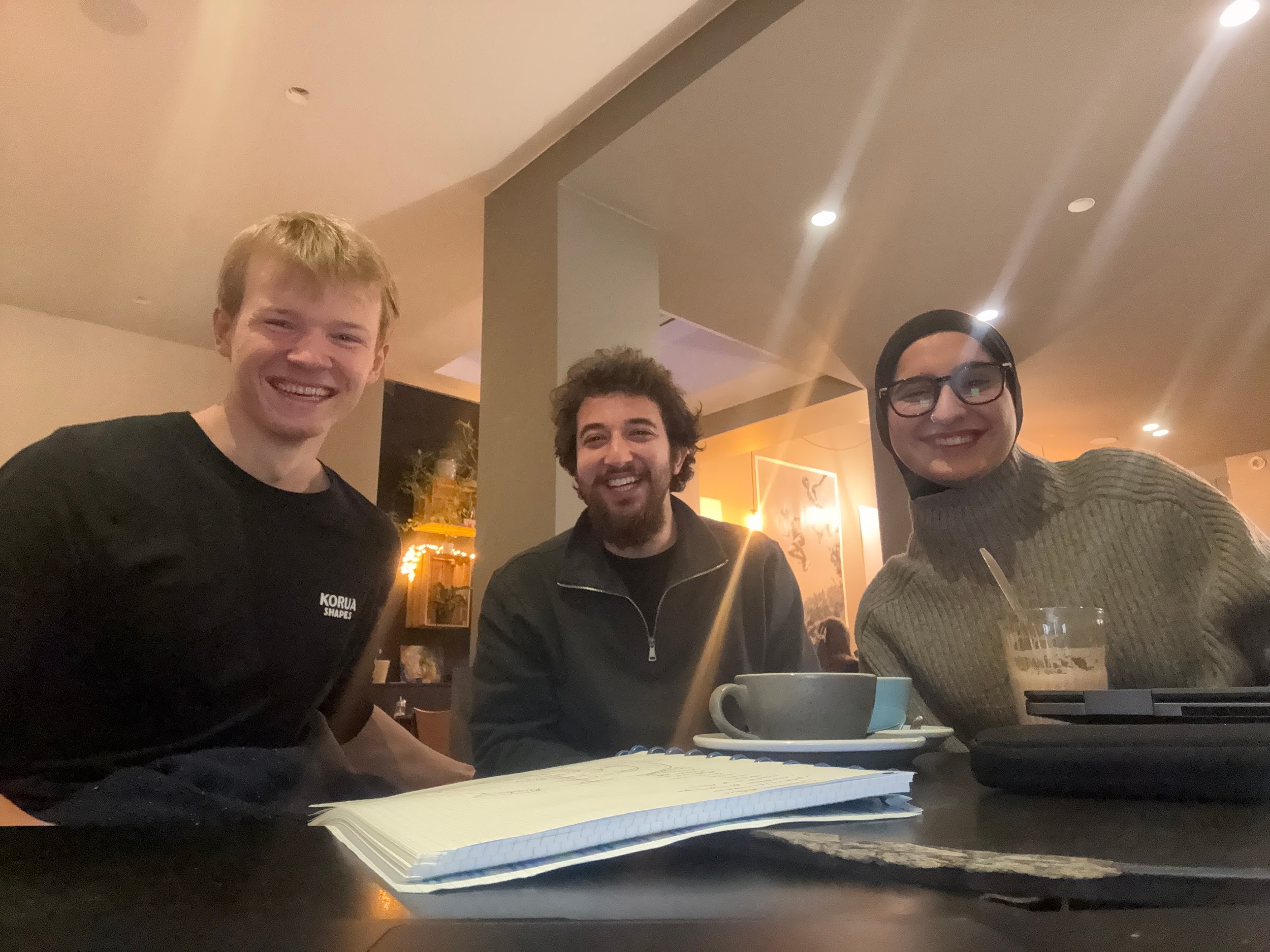
Milo, Javad & Sana
A multidisciplinary team combining data analysis, communication and research to tackle plastic pollution in Natitingou.
The project is structured in multiple phases, starting with research and contextual analysis, followed by implementation and scaling.
The first phase focused on stakeholder engagement, field research and understanding local dynamics. This included collaboration with local partners and organisations active in waste management.
The next phase focuses on implementation, including awareness campaigns, educational programmes and pilot initiatives for waste collection and reuse.